Friday, January 30, 2026

How Hamilton By Design Engineers Better Conveyors, Chutes & Transfer Stations

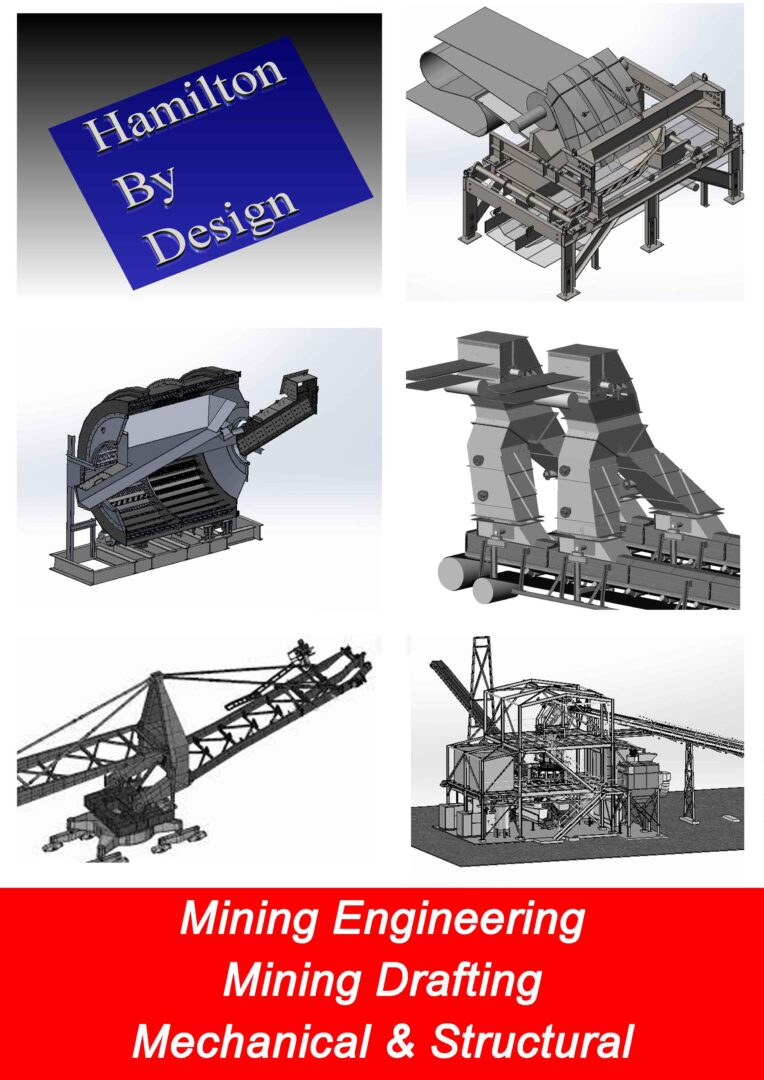
 In industrial and mining operations, material handling systems — especially conveyors, hoppers, chutes, and transfer stations — are central to productivity. These components not only move material but also determine reliability, safety, and the cost of maintenance and downtime.

For businesses tackling these challenges, Hamilton By Design delivers engineering-led solutions that combine practical experience, cutting-edge tools like 3D scanning, and fabrication-ready design outcomes.


🔹 Smart Design for Complex Material Handling

Conveyors and transfer stations are often assumed to be simple. In reality, effective design requires deep understanding of mechanical loads, dynamic material flow, wear patterns, and site constraints. That’s why Hamilton By Design approaches bulk material handling as a complete engineered system — from hoppers and chutes all the way to conveyors and control points.

👉 Learn how the team supports conveyors, transfer points, ROM bins, hoppers and more with engineering-based design:
https://www.hamiltonbydesign.com.au/bulk-material-handling-mining-rom-conveyors/


🔹 Why Chute Design Matters (and How It Works)

Whether handling coal, hard rock or ROM material, chute and transfer designs are critical to keeping operations flowing. Poorly designed chutes can lead to blockages, excessive wear, and downtime — costing both safety and productivity.

Hamilton By Design’s approach blends accurate as-built data (often captured with 3D scanning) with advanced modelling and engineering judgement. This ensures that material flows smoothly, impact forces are controlled, and dust or spillage are minimised.

👉 Read more about chute design challenges and solutions here:
https://www.hamiltonbydesign.com.au/chute-design-for-mining/


🔹 Engineering Services for Tailored Solutions

Beyond individual components, Hamilton By Design offers full mechanical engineering services that include custom design and optimisation of conveyors, chutes, hoppers, and plant layouts. Their engineers integrate practical site insights with advanced tools such as CAD modelling, simulation, and design validation to produce solutions that fit first time in fabrication and installation.

👉 Explore the broader engineering capability supporting material handling systems:
https://www.hamiltonbydesign.com.au/home/engineering-across-australia/


Final Thoughts

Material handling issues are rarely isolated. They sit at the heart of plant performance — especially in mining, mineral processing, and heavy industry where throughput, wear, and reliability define profitability.

Hamilton By Design’s blend of engineering expertise, accurate data capture, and fit-for-purpose design ensures that conveyors, chutes, transfer stations, and hoppers don’t just work — they work right.

Whether you’re planning a new system or upgrading an existing one, the engineering insights and practical solutions offered here can make the difference between recurring headaches and a system that performs reliably day after day.


Saturday, September 20, 2025

Seeing Inside the Chute

 How 3D Scanning Transforms Transfer Station

In mining and processing plants, chutes and transfer stations are the unseen workhorses that keep material moving from one conveyor to the next. When they work well, everything flows smoothly. When they don’t, production stops, crews scramble, and costs escalate. The challenge is that these critical assets are often difficult to inspect, tucked away in tight spaces and surrounded by structural steel, services, and walkways. Over time, liners wear down, plates deform, and small modifications accumulate, changing the way material behaves inside the chute. By the time blockages or spillage appear, the problem has already disrupted operations.


This is where 3D scanning is changing the way plants approach design and maintenance. Instead of relying on outdated drawings or rough tape measurements, engineers can now capture a millimetre-accurate digital record of the entire transfer station in a single scan session. High-resolution laser data shows the exact internal profile of the chute as it exists today, including wear patterns, deformations, and even accumulated material. Because the surrounding conveyors, walkways, and piping are scanned at the same time, engineers get the full picture of the installation.

Once the scan is complete, the point cloud becomes a living model of the asset. Designers can drop it straight into their CAD environment and see, in detail, where clearances are tight and where modifications have created potential pinch points. From here, digital models of new chutes or liners can be overlaid to confirm that they will fit perfectly on the first attempt, avoiding rework and expensive shutdown delays. Engineers can even run flow simulations directly against the scanned geometry to test different designs and predict how changes will affect throughput and wear.

The result is a smoother, faster upgrade process. Instead of surprises during installation, teams know exactly what they’re working with. Instead of estimating liner wear, they can plan replacement intervals with confidence. Instead of rushing crews back for extra measurements, they have all the data they need from day one.

Chutes and transfer stations may seem simple, but they play a huge role in plant performance and downtime risk. By using 3D scanning as the foundation for chute design and maintenance, mining and processing operations can move from reactive fixes to proactive improvement. The difference is not just more accurate data — it is a completely new level of confidence in the way material handling projects are delivered.

At Hamilton by Design, we help mining and processing clients capture that confidence. Our team uses high-resolution scanning to document existing infrastructure, build accurate models, and work alongside your engineers to deliver solutions that fit right the first time. If your next shutdown is approaching and you need reliable data to plan a chute upgrade, we’re ready to help turn your plant into a safer, more efficient operation — one scan at a time.


Sunday, July 13, 2025

Designing for Durability: Chutes, Diverters & Transfers for Mining in the Hunter, Newcastle & Central Coast

 Posted by Hamilton By Design | www.hamiltonbydesign.com.au


🔧 Smart Mechanical Design for Heavy-Duty Materials Handling

Across the Hunter Valley, Newcastle, and Central Coast, mining and industrial operations rely on efficient, wear-resistant material handling systems. Whether you’re operating a coal prep plant, quarry, or bulk handling facility, poorly designed chutes and transfer systems can lead to costly wear, spillage, and downtime.

That’s where Hamilton By Design comes in.

Based in regional Australia, we offer mechanical engineering and drafting services backed by real-world site experience and advanced design tools. Our team supports the full life cycle of transfer infrastructure—designing, drafting, and upgrading everything from diverter chutes to wear liners.

👉 Explore our services: www.hamiltonbydesign.com.au


🔄 What We Design

Our engineering team specialises in high-performance, easy-to-maintain material handling systems, including:

  • Transfer Chutes – Designed to control flow, minimise turbulence, and reduce liner wear.

  • Diverter Chutes – For directing material to different conveyors or bins, with hydraulic or manual actuation.

  • Trouser Leg Chutes – For splitting product streams while maintaining even, balanced flow.

  • Hood & Spoon Transfers – Gentle, low-impact systems that extend belt life and reduce spillage.

  • Wear-Resistant Liners – Hardox®, ceramic, or rubber-backed options for extreme applications.

Need help designing or upgrading your chute system? Contact us at www.hamiltonbydesign.com.au for a quote or consultation.


📍 Locally Focused Engineering Support

Hamilton By Design proudly services clients throughout:

  • Hunter Valley – including Muswellbrook, Singleton, Maitland, and Cessnock

  • Newcastle – port infrastructure, terminals, and heavy industrial zones

  • Central Coast – including Wyong, Tuggerah, and Somersby-based manufacturing

We know the region, the industry, and the shutdown pressures you face. Whether you’re replacing a chute or upgrading an entire transfer tower, we offer fast, site-ready solutions tailored to your environment.


📐 Drafting & Engineering Deliverables

Hamilton By Design provides detailed documentation for both new designs and brownfield upgrades:

  • GA and detail drawings for fabrication

  • 3D CAD models (SolidWorks, Inventor, or your native format)

  • Lidar scanning and point cloud integration for existing plant

  • Exploded views and assembly diagrams for install teams

  • BOMs and part numbering for procurement and site control

Our goal is to help you get from concept to install with fewer errors, less downtime, and maximum wear life.

👉 Let’s talk about your next project: www.hamiltonbydesign.com.au


🛡️ Designed for Wear Resistance

Your transfer system is only as reliable as its ability to handle impact, abrasion, and fines buildup. That’s why we engineer with wear in mind, choosing liner systems and flow paths that balance:

  • Material type and abrasiveness

  • Drop heights and impact angles

  • Flow velocity and capacity

  • Access for maintenance and liner replacement

Let Hamilton By Design assess your existing systems and offer solutions that reduce rework, maintenance hours, and spillage.


💬 Why Work With Us?

  • ✅ Local knowledge of Hunter, Newcastle & Central Coast facilities

  • ✅ Site-measured and Lidar-scanned for retrofit accuracy

  • ✅ Proven mechanical engineering and drafting capability

  • ✅ Responsive and professional service

  • ✅ Fabrication-friendly documentation packages

Clients across NSW trust Hamilton By Design to deliver high-quality, practical solutions for chutes, diverters, and material transfer systems.


📞 Get in Touch

Based regionally and working nationally, Hamilton By Design is your mechanical partner for efficient, durable, and smart materials handling systems.


📍 Serving Hunter Valley, Newcastle & Central Coast
🌐 Website: www.hamiltonbydesign.com.au
📧 Email: info@hamiltonbydesign.com.au


#HamiltonByDesign #MechanicalEngineering #TransferChutes #DiverterChuteDesign #WearResistance #HunterValleyMining #NewcastleIndustry #CentralCoastEngineering #MechanicalDrafting #ChuteDesignExperts #LidarScanning


Friday, February 15, 2013

Mechanical design and drafting


Mechanical design and drafting
The team at Hamilton By Design provide effective solutions for Mechanical Drafting and Detailing Services. We can produce industrial work shop drawing of mechanical parts with our wide range of drafting software.
Whether you require mechanical design, detailed drafting, 3-D models or transferring technical drawings to computer, all are performed to your company standards and specifications.
  • Shop Drawings.
  • Raw casting and machined components drawings.
  • Patent Drawings.
  • Steel Fabrication Drawings.
  • Fixture detailing.
  • Plant layouts.
  • P & ID drawings and weld maps.
  • On-site Drafting Support
Hamilton By Design offer a complete 2D to 3D conversion our parametric modeller accepts over 13 various cad formats that offer a similar number of export options.

Our 3-D solid models offer our designers complete control, through direct modelling techniques, dimensions drive the model geometry; changing dimensions changes the shape of the model. You can relate dimensions to each other in equations.

Furthermore, we offer the latest in 3-D Modelling tools which cover the complete design process—from design and validation to technical communications and data management. The intuitive design interface and integrated software work together and give you the freedom to focus on innovation. You can maximize the productivity of your design and engineering resources to create products better, faster, and more cost-effectively.

Predominately our 3D CAD software helps designers quickly become proficient 3D modelers and increases the speed to create and deliver designs, yet it also other functionality such as:
  • Studying component functionality.
  • Measuring an object and then reconstructing it as a 3D model using toolboxes.
  • 3D scanning and converting point cloud data to parametric cad models.
  • Material testing including, Metallurgical Testing includes chemistry, micro-structure, core/surface hardness, surface treatment etc.
  • Rapid prototyping.
  • Prototyping and physical testing.
  • FEA validations and commissioning.
  • Simulation technology speeds up prototyping and verifies your design
  • You can leverage 3D design data to quickly communicate complex technical details with animations and visual instructions
  • Data management software makes sure the right file version is available, avoids costly errors, and reduces the time spent searching for existing parts or designs by up to 40%

For more information on Mechanical design and drafting

 Contact Hamilton By Design Today


Monday, October 22, 2012

Chute Design through DEM

Due to bad transfer chute design the reliability of belt conveyors not always is reflected in an increase in reliability for the overall plant. Improving the design of transfer stations requires observation and experience but increasingly it requires an improvement in the application of available technologies such as DEM.

The present requirement for higher annual throughput capacity in the iron ore industry generally demands higher design capacity and speeds for belt conveyors. Conveyor belt technology has advance to meet the demand. However the reliability of the belt conveyor at high capacity is not reflected in an increase in reliability for the overall plant.

In part this is due to the transfer chute, an increase in unscheduled downtime such as blockages and schedule downtime such as increase in maintenance requirements.

Improving the design of transfer stations requires observation and experience but increasingly it requires an improvement in the application of available technologies such as flowability technology and discrete element methodology. These technologies require test work on representative samples to determine the input data. Reliable data is required to predict outcomes such as the likely hood of blockage and predictable flow trajectory.
This article illustrates present knowledge and future potential for transfer chute design.

Talk to the team at Hamilton By Design with regard to DEM


Sunday, September 9, 2012

Virtual Cad - Design Drafting Resource

Hamilton By Design provide highly professional CAD drafting service. This 1st class drafting service can be provided in person or over the Internet.

CAD - Design Drafting of Structural - Mechanical - 3D Pipework

Our Internet freelance CAD drafting service completely operates out of Australia with all designs for the Australia market place with all projects conforming to Australia Standards.  Our Internet CAD drafting service offers practicable solutions to deliver projects ahead of deadlines.


The team at Hamilton By Design offer a flexible design drafting resource that ensures assembly and performance.
 
For more information on getting your projects delivered on time and within budget contact Hamilton By Design today.


Wednesday, August 8, 2012

Transfer Chute Development

Hamilton By Design - Mining Services Consultants,  model, develop and design transfer chutes for a range of bulk materials.  Furthermore our team offers practical designs that lend themselves to days manufacturing methods. Many of our past solutions have included bins, feeders, hoppers, hoods, spoons and gates.

If you planning a new transfer or upgrading an existing bulk material system Hamilton By Design have the team with depth of experience to resolve your design contrains. From a stock pile or a conveyor to conveyor or into a crusher / mill transfer move your stockpile. 

Hamilton By Design can develop a chute to meet your production requirements. 


Monday, July 2, 2012

Conveyor Design & Detailing

Hamilton By Design provide a range of design services for materials handling systems including custom design of purpose-built machinery, structural inspection, analysis, cost estimates, engineering and project management, for both new projects and existing plant upgrades.
Hamilton By Design can handle your materials handling.


Experience on Plants
  • Oaky Creek 
  • Christmas Creek
  • White Haven
  • United Collieries
  • One Steel - Whyalla
  • Orica - Lidell
  • Gold Ridge Mining - Mining Solomon Islands
  • Boddington Gold Mine
  • Comsteel - Newcastle
  • Bluescope Steel - Port Kembla
  • Orica - Kurri Kurri
  • ADI - Benalla
  • Ramset Fasterners - Croydon
  • Ramset Fasterners - Lonsdale

Past Projects have included
  • Conveyor design
  • Design of automatic equipment
  • Chute and bin design
  • Reclaim tunnels
  • Crushing and screening stations
  • Storage bins and stockpiles
  • Mechanical guarding and safety audits
  • Mobile stockyard machinery services and utilities
  • Project management


Wednesday, June 13, 2012

Design Drafting Mining Projects

Site drafting projects, petroleum & oil industry drafting, plans & planning drafting design, oil industry drafting
Our aim is to produce cost effective drawings of the highest level of accuracy and quality to meet the needs for your company. We can accommodate virtually any project, from structural drafting to mechanical drafting design, piping drafting to 3-dimensional drafting and virtually any type of 2D drafting and AutoCad 3D services in between.

Hamilton By Design offer a range of design services including: Concrete foundations, slabs & equipment bases, Buildings, tanks, skid mounted equipment & other structures, Mechanical components & assemblies, Converting vehicles to run on rails, Under ground vehicles, Drill rig, salt harvesters & head frames drawings, Bore field works & pump stations, Water purification, potable water reticulation & sewerage projects.

For more information on how Hamilton By Design can assist your project be delivered in time contact www.hamiltonbydesign.com.au  today

Thursday, June 7, 2012

Chute Design


Conveyor transfer stations are critical parts within the raw materials conveyor track. The 
material needs to be guided from the oncoming conveyor to the following 
transport system. Transfer Chutes carry out this process, which require to be 
designed so that dust, noise and wear are minimized.


Furthermore chute design needs is to avoid blockages where material flow 
is hindered or obstructed due to build up of material in the chute. In addition where blockages occur access must be designed for maintenance personal.


At Hamilton By Design investigations leading to a optimum chute design are carried out through 
experimental tests in the laboratory, with the aid of computer simulation 
programs. The presentation shows every single step to reach the optimum 
chute design for each application.


For more information on Chute and Transfer Chute design contact Hamilton By Design

Tuesday, March 6, 2012

Chutes & Transfer Stations: Engineering, Modelling, and As-Built Workflows

In bulk materials handling systems, chutes and transfer stations are critical components that influence material flow efficiency, wear performance, and operational reliability. Whether you’re upgrading existing infrastructure or designing new plant layouts, accurate engineering documentation and modelling are essential to reduce risk and maximise uptime.

At Hamilton By Design, we integrate reality capture (LiDAR scanning), point cloud modelling, and engineering CAD workflows to deliver highly detailed documentation and constructable designs for chutes, transfer stations, and related bulk handling assets.


What Are Chutes & Transfer Stations?

In material handling systems, chutes are structures that direct the flow of material between conveyors, hoppers, bins and processing equipment. A transfer station is the junction point where material changes direction, speed, or conveying method — often involving multiple chutes, diverters, and supporting structures.

These areas are prone to:

  • Abrasion and wear

  • Blockages and spillage

  • Complex geometry

  • Tight tolerances

Which makes accurate documentation and engineering-grade models absolutely vital.


Traditional Challenges with Chutes & Transfer Documentation

Historically, detailing of chutes and transfer stations has suffered from:

✘ Inaccurate or outdated drawings

Original design drawings often do not reflect field conditions — especially in brownfield facilities that have been modified over time.

✘ Manual measurement limitations

Tape measures and handheld methods are slow, inaccurate, and disruptive in active plants.

✘ Misalignment between design and installation

Lack of accurate as-built data leads to rework, clashes, and extended shutdowns.


Engineering-Grade Reality Capture: LiDAR Scanning

The foundation of accurate chute and transfer station modelling begins with 3D laser scanning. Using high-precision LiDAR scanners, we capture millions of data points across the surfaces of existing structures.

This produces a registered point cloud dataset that:

  • Captures true geometry

  • Records global coordinates

  • Provides millimetre-level accuracy

These point clouds become the single source of truth for all downstream modelling and documentation.

Learn more about engineering-grade scanning here:
👉 https://www.hamiltonbydesign.com.au/3d-laser-scanning/

And see how we tailor scans for engineering outcomes here:
👉 https://www.hamiltonbydesign.com.au/home/engineering-services/3d-laser-scanning/3d-laser-scanning-for-engineering-projects/


Point Cloud Modelling for Chutes & Transfer Stations

Once LiDAR data has been captured and registered, the next step is point cloud modelling. This process converts raw scan data into usable CAD representations.

Our point cloud modelling services deliver:

  • Clean 3D surfaces and solids

  • Detailed geometry for chutes, liners, skirts, and diverters

  • Alignment with conveyors, structural steel, and supports

  • Prepared outputs for design, analysis, or fabrication

Point cloud models allow engineers to visualise existing conditions with confidence and reduce guesswork often associated with legacy assets.


As-Built CAD & Engineering Documentation

For clients that require deliverables for detailed design, procurement or construction, point cloud data is often converted into as-built CAD models and drawings.

These as-built deliverables support:

  • Fabrication and installation coordination

  • Clash detection

  • Tolerance verification

  • Structural and mechanical design inputs

The result: faster turnarounds and fewer surprises during shutdowns.

Learn more about our as-built drawing workflows here:
👉 https://www.hamiltonbydesign.com.au/home/engineering-services/3d-laser-scanning/as-built-drawings-from-a-lidar-scanner/


Integration with Broader Engineering Services

Chutes and transfer stations do not exist in isolation. Often they interface with:

  • Structural steel frameworks

  • Conveyor networks

  • Access platforms and safety systems

  • Hoppers, bins, and feed systems

Hamilton By Design’s full suite of engineering services ensures that point cloud models are integrated into broader design deliverables:

👉 https://www.hamiltonbydesign.com.au/home/engineering-services/

This means your chute and transfer station modelling is:

  • Aligned with mechanical and structural requirements

  • Compatible with fabrication workflows

  • Usable for analysis and compliance


Benefits of This Integrated Approach

By combining:
✔ LiDAR scanning
✔ Point cloud modelling
✔ CAD detailing
✔ Engineering review

You gain outcomes that are:

🔹 Accurate

True-to-site geometry verified against reality.

🔹 Constructable

Models that work in the real world, not just on paper.

🔹 Efficient

Less rework, fewer surprises on site.

🔹 Risk-reducing

Early clash detection and validation of fit before major shutdown windows.


Use Cases Where This Matters Most

Our clients commonly use these services for:

  • Refining existing chute geometry before rebuilds

  • Planning transfer station upgrades

  • Integrating new conveyors into old layouts

  • Documenting legacy assets prior to shutdown

  • Preparing for fatigue or wear liner analysis


Conclusion — Engineering Confidence for Critical Assets

Chutes and transfer stations are mission-critical nodes in material handling systems. When they’re documented well, they operate well. When they’re documented poorly, they become pain points, risk points and downtime drivers.

Hamilton By Design brings precision, technology, and engineering accountability to every project — reducing risk and increasing certainty for your next chute or transfer station upgrade.


Call to Action

To discuss how our point cloud, CAD, and engineering services can benefit your next chute or transfer station project, contact us today.


Hamilton By Design - Mechanical and Structural Detailers Fixed Plant Mobile Plant Processing Plant Conveyor Systems Piping Systems 


Solidworks Design